 1300 598 223


 Designing Portal Login
Have you ever noticed the small tags or markings on the end of treated timber and wondered what they mean?
These markings provide important information about how the timber has been treated, where it was treated, and the level of protection applied.
Understanding them can help you make sure the timber you are purchasing is suitable for its intended application.
What Do the Numbers Mean?
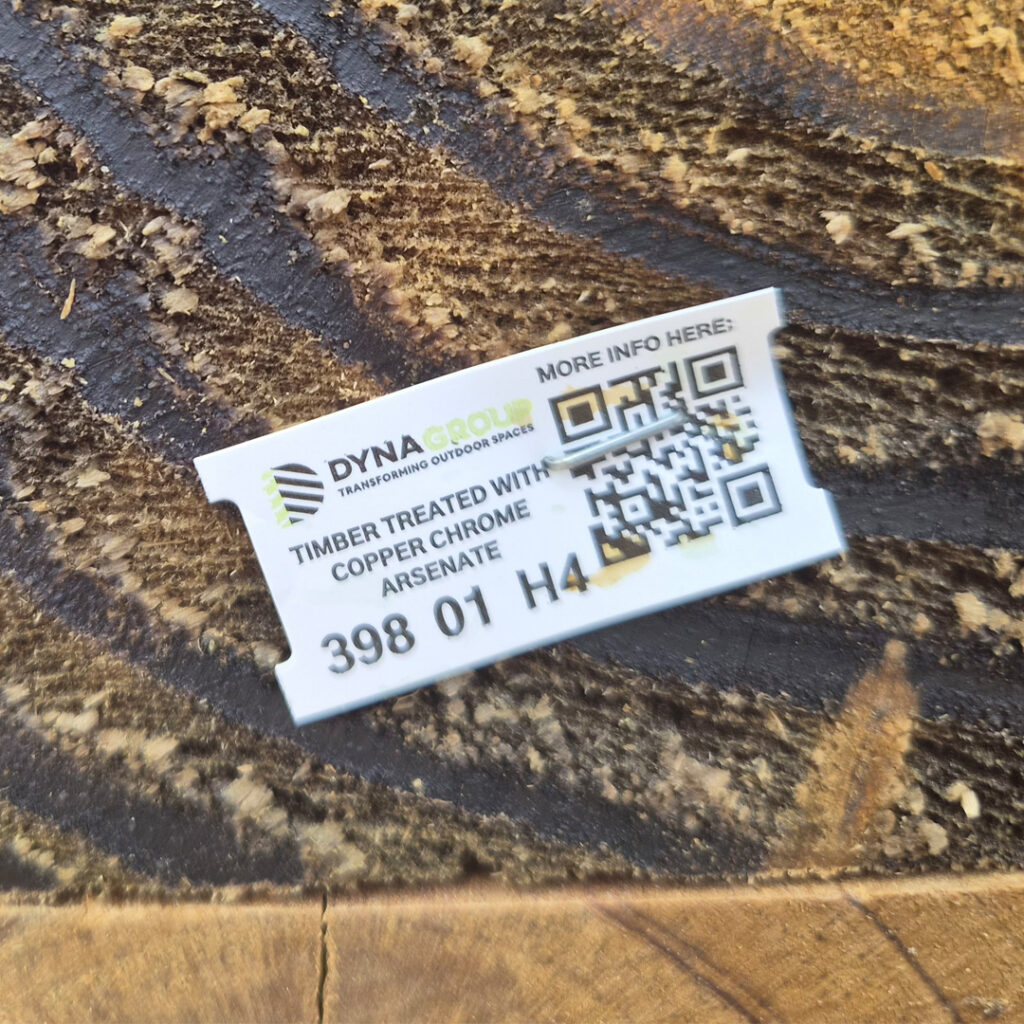
A typical treatment marking may look something like:
398 01 H4
Each section tells you something different about the treatment process.
398: Treatment Plant Identification
The first number identifies the treatment plant where the timber was processed.
In this example, 398 is the registration number for DynaGroup’s treatment plant, registered with the Timber Preservers Association of Australia (TPAA).
This provides traceability and identifies the facility responsible for treating the timber.
01: Treatment Chemical
The second number identifies the preservative treatment used.
In this example, 01 indicates that the timber has been treated using Copper Chromium Arsenic (CCA).
CCA is a widely used timber preservative designed to protect timber against decay, insects and other forms of biological deterioration.
H4: Hazard Level
The final part of the marking identifies the hazard level the timber has been treated to.
In this example, H4 means the timber is suitable for applications where it will be in contact with the ground.
Hazard levels are important because timber used in different environments requires different levels of protection.
For example, timber used above ground may have different treatment requirements from timber used in direct ground contact.
Why Treatment Markings Matter
Not all treated timber is designed for the same application.
Using timber with an insufficient treatment level can affect its durability and suitability for the environment it is being installed in.
That is why it is important to check the treatment markings before purchasing or installing treated timber.
The markings allow you to confirm:
- Where the timber was treated
- The preservative treatment used
- The hazard level the timber has been treated to
- Whether the timber is suitable for the intended application
Check Before You Purchase
Treatment markings may be small, but they provide valuable information.
Before purchasing treated timber, take a moment to check the identification details and confirm that the timber has been treated to the appropriate hazard level for your project.
Choosing correctly treated timber from the outset can help support better durability, performance and long-term reliability.
Learn More About Timber Treatment
DynaGroup provides timber treatment services designed to help protect timber across a range of applications.